A firsthand account of harvesting a traditional cassava variety near my home in Abia State, Eastern Nigeria, and what comes next.
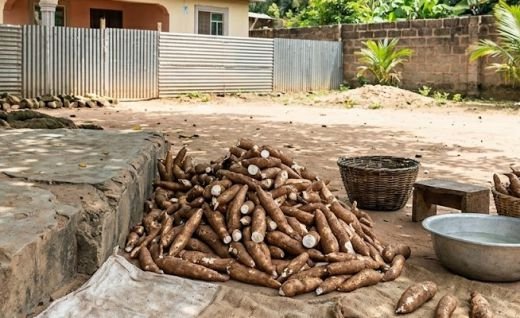
Yesterday I harvested a plot of cassava from the farm near my home in Abia State.
The stems went into the ground in July 2025, and yesterday it was time to see what the season had produced.
I am growing a local traditional variety on this plot, the kind that has been cultivated in this part of Eastern Nigeria for generations, long before the improved varieties like TMS 419 and TME 419 arrived.
Our people in Ngwa land have always kept these traditional varieties going alongside whatever new breeds come through, because they know the soil here, they process predictably, and they carry a taste and texture that many families still prefer for their garri and fufu.
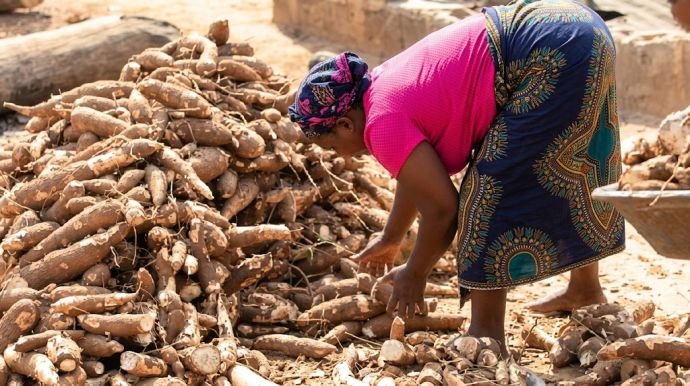
This was an average harvest, typical for the season, nothing extraordinary, but solid and dependable.
The tubers came out well-formed; the roots were firm, and the yield was what I expected from this variety at this time of year, after a few rainfalls.
Usually, during dry season, the tubers shrink a bit because of a lack of water (nothing bad with that).
With my long experience in cassava farming, the tubers tend to increase in size after a few rains, and their starch content doubles too because they have absorbed water, and this is when you know their real yield, not in the dry season when they are deprived of water.
That is why I prefer harvesting my cassava well into the rainy season.
Not every harvest needs to be a record-breaker. In cassava farming, a consistent, reliable harvest from a plot you prepared well is something to be satisfied with.
After more than 30 years of farming cassava, I have learned not to chase dramatic yields from traditional varieties.
They are not bred for maximum tonnage the way improved varieties are.
What they offer instead is resilience, familiarity, and a quality of root that suits traditional processing methods, and for garri, that matters.
From My Experience
Traditional varieties harvested at 8–12 months in Abia State tend to have a lower starch content than those left longer in the ground, but they peel more easily and ferment more predictably during garri processing.
If I am making garri for home consumption, this is often my preferred harvest window.
What happens next: processing into garri
Fresh cassava roots begin to deteriorate within 24 to 48 hours of harvest.
That is one of the realities every cassava farmer in this part of Nigeria lives with: you do not harvest and rest.
The moment the tubers are out of the ground, the clock is running.
So today, processing begins. These tubers will go through peeling, washing, and grating.
After grating, the mash will be bagged and pressed to remove the liquid; this is where the fermentation happens, and where the distinctive sour note of quality garri begins to develop.
Once pressed, the dried mash goes into the frying pan, stirred continuously over heat until the granules are dry, toasted, and ready.
It is a process I have done more times than I can count, first as a child beside my mother, and now on my own farm.
Each batch is slightly different: the fermentation time, the moisture level in the mash, the heat of the fire, and you learn to read those differences by feel and experience, not by following a fixed recipe.
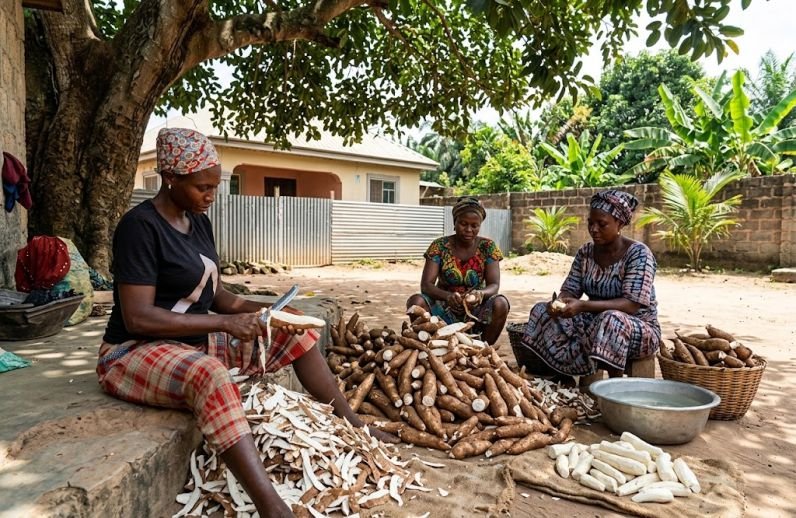
Beginning cassava processing: Peeling freshly harvested tubers on my farm in Abia State. — Chimeremeze Emeh, June 2026
Why I am Documenting this
I created Cassava Pathway because I believe the most useful cassava knowledge is the kind that comes from actually farming and processing cassava, not from reading about it.
Posts like this one are part of that mission.
Real harvests, real observations, real results from a real farm in Abia State, Eastern Nigeria.
If you are a smallholder cassava farmer in Nigeria or elsewhere in Africa, I want this site to feel like it was built by someone who understands exactly what your days look like, because it was.
I will follow up with a post on the garri processing once it is done.
If you have questions about harvesting traditional varieties or the garri-making process, drop them in the comments below.

Chimeremeze Emeh is a tropical crop farmer and chemical engineer from Ntigha, Isiala Ngwa North LGA, Abia State, Eastern Nigeria, specializing in cassava and palm oil, with over 30 years of hands-on experience growing, harvesting, and processing cassava. He grows TMS series, TME 419, and local traditional varieties on his own farms and operates a small-scale cassava flour and starch production business through Cassava Pathway, which he founded as a CAMA-registered agribusiness in 2024. He is also the founder of Palm Oil Pathway, where he applies the same tropical farming expertise. His farms are located in Ntigha, Abia State.