Last updated on August 11th, 2026 at 03:10 pm
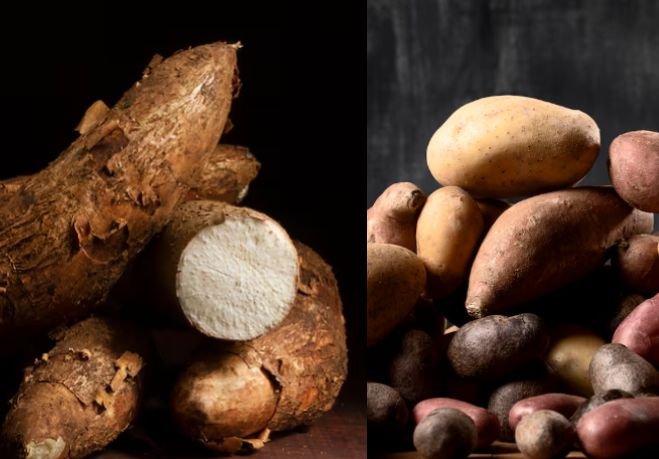
Cassava vs potato resistant starch gets framed online as a simple, one-sided contest, but the real science splits sharply by amylose content, cooking method, and which tuber actually has real human clinical trial data behind its own gut-health claims today.
Cassava and potato both deliver resistant starch, the fiber-like fraction that skips small-intestine digestion and feeds gut bacteria in the colon.
Cassava carries lower amylose content than potato, roughly 17 to 20 percent versus 23 to 27 percent, and that gap matters because amylose content drives how much starch survives cooking and reforms during cooling.
Human clinical trials on potato resistant starch and gut microbiota already exist, while comparable direct trials on cassava remain scarce.
This post breaks down what the actual research supports for each root, rather than repeating the common claim that one tuber simply beats the other.
Disclaimer: This article is for informational purposes only and does not constitute medical advice. The author is not a medical doctor or registered dietitian. Always consult a qualified healthcare provider before making dietary or medical decisions related to cassava consumption.
Table of Contents
What Exactly Is Resistant Starch?
Resistant starch is the fraction of starch that resists breakdown in the small intestine and reaches the colon largely intact.
Once there, gut bacteria ferment it into short-chain fatty acids, including butyrate, which supports the cells lining your colon.
This site’s dedicated guide on cassava root as a resistant starch source covers the four recognized types in full detail.
This comparison stays narrowly on how cassava and potato specifically stack up against each other.
Resistant Starch in Cassava
Resistant starch in cassava comes mainly from its raw, granular structure, a form researchers classify as type 2 resistant starch.
Cooking gelatinizes that structure, which reduces the resistant fraction significantly compared to raw or minimally processed cassava.
Cassava starch also carries relatively low amylose content, typically 17 to 20 percent, according to a comparative study published on ScienceDirect.
That lower amylose share limits how much resistant starch reforms once cooked cassava cools back down.
Portion size still matters, since some people report digestive discomfort or blood sugar shifts depending on preparation and personal tolerance.
Resistant Starch in Potato
Potato resistant starch behaves differently, since cooking and cooling actively increases it through a process called retrogradation.
Potato starch carries higher amylose content than cassava, roughly 23 to 27 percent, according to the same ScienceDirect comparison.
That higher amylose share is exactly what drives stronger retrograded resistant starch formation once cooked potatoes cool down.
A randomized crossover trial published in the journal Nutrients tested a daily potato side dish in fifty adults and measured real shifts in gut bacteria abundance.
Cooked-and-cooled potatoes, potato salads, and isolated raw potato starch all serve as practical, well-tested sources of this resistant starch type.
Cassava vs Potato Resistant Starch: The Real Difference
Cassava vs potato resistant starch comes down to two different mechanisms rather than one tuber being simply superior.
- Cassava supplies more resistant starch in its raw, unprocessed state, though cooking sharply reduces that advantage.
- Potato supplies less resistant starch raw but gains it back through cooking and cooling, backed by its higher amylose content.
Choosing between cassava vs potato resistant starch sources depends more on preparation method than on which root you start with.
Anyone comparing the two tubers more broadly can see this site’s cassava root vs potato comparison for context beyond gut health alone.
Gut Health Benefits Comparison
Direct clinical evidence favors potato resistant starch more heavily than it favors cassava at this point in the research.
A study summarized by Gut Microbiota for Health found that potato-derived starch increased fecal short-chain fatty acids more than resistant starch from maize or inulin fiber.
That same research linked potato resistant starch intake to increased bifidobacteria and higher abundance of known butyrate-producing gut bacteria.
Comparable large-scale human trials measuring cassava resistant starch and gut microbiota shifts are largely absent from the current published literature.
That gap does not mean cassava fails to support gut health, only that the direct clinical proof remains thinner than what exists for potato.
Glycemic Impact and Preparation
Glycemic response differs between the two roots, and preparation method changes the picture substantially for both.
This site’s cassava glycemic index guide covers how boiling, frying, and processing shift cassava’s blood sugar impact in detail.
Potatoes generally carry a higher glycemic index than boiled cassava, since their starch breaks down into glucose more rapidly during digestion.
Cooling cooked potatoes before eating them lowers that glycemic impact somewhat, since some starch converts back into a resistant, slower-digesting form.
Potential Downsides and Safety Considerations
Both tubers carry real safety considerations that matter more than resistant starch content alone in daily decisions.
Raw cassava contains cyanogenic glycosides that convert to cyanide unless removed through peeling, soaking, and thorough cooking.
This post on how to peel cassava root the right way covers that preparation process in full.
Raw or undercooked potatoes carry solanine and lectins, compounds that can cause nausea or headaches if eaten without proper cooking.
WebMD’s overview of high-lectin foods lists raw potatoes among the foods that need thorough cooking before eating safely.
Sticking to the cook-and-cool method for potatoes, and full processing for cassava, avoids both risks while still preserving resistant starch benefits.
Making Both Tubers Work for You
Rotating both tubers, rather than picking a single winner, gives your gut bacteria a broader range of fermentable fiber sources.
Cooked-and-cooled potato dishes, potato salads, and boiled cassava all fit into a varied, resistant-starch-friendly meal rotation.
The article, cassava nutritional information guide, and its broader guide to the cassava root cover portion sizing and preparation basics for daily use.
If tapioca starch fits your routine too, the article – tapioca and cassava starch guide explains how that product differs from whole cassava root.
Introducing either tuber gradually helps your digestive system adjust without triggering bloating or discomfort.
Conclusion
Cassava vs potato resistant starch is not a contest with one clear winner, despite how it commonly gets framed online today.
Cassava offers more resistant starch raw, thanks to its granular structure, but loses much of that advantage once cooked.
Potato gains resistant starch through cooking and cooling, backed by higher amylose content and real human clinical trial data on gut bacteria shifts.
Choose cassava for its lower glycemic profile, and cooked-cooled potato for its stronger direct research support.
Rotate both, prepared safely, for a genuinely varied prebiotic fiber routine.
Frequently Asked Questions
Is cassava or potato resistant starch better for gut bacteria?
Potato currently has stronger clinical backing, since randomized human trials link its resistant starch to increased beneficial bacteria and short-chain fatty acids, while comparable cassava trials remain scarce.
Can resistant starch cause bloating?
Yes, sudden high intake of either resistant starch source can trigger gas or bloating, so gradual introduction with small servings helps your gut bacteria adjust comfortably over days.
Does cooking destroy resistant starch completely?
Cooling cooked potatoes and cassava triggers retrogradation, which meaningfully restores some resistant starch, though potato benefits more due to its higher natural amylose content compared with cassava starch.
How much resistant starch should you eat daily?
Most researchers suggest 15 to 30 grams of resistant starch daily, starting with smaller servings from either cassava or potato to avoid sudden digestive discomfort or noticeable bloating.

Chimeremeze Emeh is a tropical crop farmer and chemical engineer from Ntigha, Isiala Ngwa North LGA, Abia State, Eastern Nigeria, specializing in cassava and palm oil, with over 30 years of hands-on experience growing, harvesting, and processing cassava. He grows TMS series, TME 419, and local traditional varieties on his own farms and operates a small-scale cassava flour and starch production business through Cassava Pathway, which he founded as a CAMA-registered agribusiness in 2024. He is also the founder of Palm Oil Pathway, where he applies the same tropical farming expertise. His farms are located in Ntigha, Abia State.