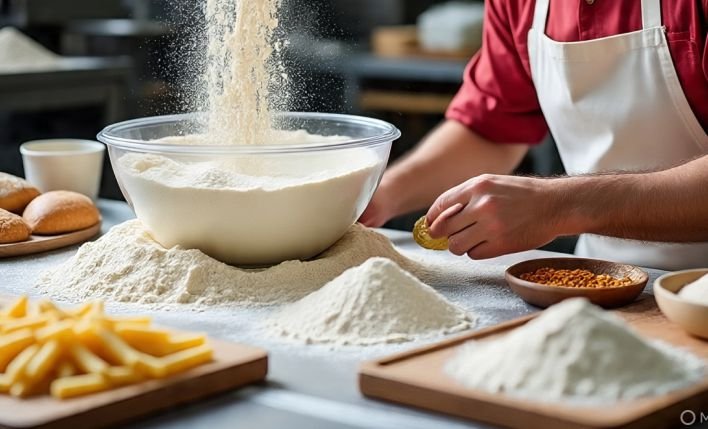
Industrial application of cassava flour supports food processing, baking mixes, paper coating, adhesives, and animal feed through bulk, binding ability, and steady quality.
Cassava flour plays a growing role in industrial production, and you see its value beyond kitchens and bakeries.
Made from dried cassava roots, this gluten-free flour supports industrial uses in food processing, paper making, animal feed, and light manufacturing.
You find it used as a binder, filler, and bulking agent because it mixes well, holds moisture, and performs consistently.
In food factories, cassava flour helps improve texture in snacks, sauces, and baking mixes.
In non-food industries, it supports paper coating, adhesive formulation, and feed production due to its natural binding ability.
Its wide availability and plant-based origin make it appealing for industries focused on cost control and supply stability.
As demand for alternative raw materials grows, the industrial applications of cassava flour continue to gain attention for its practical performance across industrial sectors.
Table of Contents
Cassava Flour in the Food Industry
One of the foremost industrial applications of cassava flour is in the food industry.
Cassava flour plays a key role in modern food manufacturing, supporting consistent texture, stable processing, and reliable storage across a variety of products.
Its neutral flavor and smooth performance make it ideal for packaged foods, ready-to-eat meals, and industrial-scale operations, while also meeting consumer demand for gluten-free and plant-based options.
Support for Gluten-Free Production
Cassava flour can replace wheat in baked goods, pasta, and snacks, providing structure and softness without gluten.
It maintains high-volume production consistency while allowing flavors from other ingredients to stand out.
This makes your products appealing to a wide audience, meeting dietary demands and supporting clean label initiatives in food manufacturing.
Thickening and Texture Control
In sauces, soups, gravies, and fillings, cassava flour helps control thickness and create a smooth, uniform texture.
It disperses evenly during mixing and heating, preventing cloudiness and ensuring each batch looks and feels consistent.
Its natural thickening ability supports stability in ready-to-eat and packaged liquid foods while maintaining a clean taste.
Binding and Stability in Processed Foods
Cassava flour acts as a reliable binder in processed meats, plant-based products, and formed foods.
It holds ingredients together, reduces breakage during transport, and supports moisture retention, improving shelf life.
Its steady availability and consistent performance help control costs and maintain uniform quality in large-scale production environments.
Snack and Fried Foods Applications
Cassava flour is widely used in snack and fried food production to deliver crisp texture, even browning, and batch-to-batch consistency.
Its fine coating sticks well to chips, crackers, and other fried items, puffing and browning during frying while protecting moisture inside.
This produces snacks that are crunchy outside and balanced inside, making it a reliable choice for industrial snack manufacturing.
Bakery and Confectionery Applications
Cassava flour is essential in bakery and confectionery production for gluten-free breads, cookies, and pastries.
It blends easily, producing dough that forms evenly and bakes reliably.
Its moisture retention keeps baked goods soft, prevents dryness, and extends shelf life naturally without heavy additives, supporting both small batch and large-scale commercial baking.
Recommended Posts
Uses and Benefits of Fermented Cassava Flour
Culinary Applications of Cassava Flour
Signs of Cassava Flour Spoilage
How to Store and Preserve Cassava Flour
Benefits and Uses of Cassava Flour
Utilization of Cassava Flour in Beverages and Sauces
Another industrial application of cassava flour is in beverages and sauces.
Cassava flour is widely used in beverages, sauces, and gravies to achieve smooth texture, even consistency, and stable processing results.
Its natural thickening ability makes it easy to blend into liquids without affecting flavor.
Smooth Texture in Beverages
When added to drinks, cassava flour disperses evenly, preventing lumps and a grainy texture.
It creates a consistent mouthfeel that improves the overall drinking experience.
Its neutral taste allows the original flavors to shine, making it suitable for both savory broths and lightly sweet beverages.
Viscosity Control in Sauces and Gravies
In sauces and gravies, cassava flour manages thickness while keeping color and flavor intact.
It helps maintain a uniform appearance and stable consistency, which is important for packaged or ready-to-eat products.
Plant-Based and Gluten-Free Benefits
Cassava flour is plant-based and gluten-free, supporting clean label and diet-friendly goals.
It ensures your sauces and beverages meet modern consumer expectations for healthy, stable, and reliable liquid foods.
Pharmaceutical Applications of Cassava Flour
The industrial applications of cassava flour are evident in pharmaceutical industries, where it is becoming a practical choice because reliable binding, consistent tablet formation, and safe digestion are required.
Its properties make it a natural and effective excipient in tablets and capsules.
Binder for Tablets and Capsules
Cassava flour acts as a natural binder, helping powdered ingredients stick together.
This ensures tablets maintain their shape during production, packaging, and transport.
It supports consistent density in each tablet, which is important for accurate dosing and quality control in pharmaceutical manufacturing.
Supports Digestibility and Absorption
Using cassava flour helps tablets break down efficiently in the digestive system.
This improves absorption of the active ingredients, supporting better therapeutic outcomes.
It ensures patients receive the intended dose without compromising the tablet’s integrity during handling.
Hypoallergenic and Safe for Sensitive Patients
Cassava flour is suitable for patients with sensitivities to gluten, dairy, or other excipients.
It broadens access to medications while minimizing the risk of adverse reactions, supporting safe and inclusive pharmaceutical formulations.
Moisture Absorption and Shelf Life
Cassava flour absorbs moisture effectively, reducing degradation and extending shelf life.
This stability ensures that medications remain reliable from production to consumption, making it a dependable ingredient for pharmaceutical applications.
Cassava Flour in Packaging and Biodegradable Products
The third industrial application of cassava flour is in packaging and biodegradable products.
Cassava flour is increasingly used in biodegradable packaging and eco-friendly products as businesses look for sustainable alternatives to plastics.
Its natural properties support manufacturing solutions that reduce environmental impact while maintaining functionality.
Bioplastics and Eco-Friendly Packaging
The starch in cassava flour can be processed into bio-based plastics that replace petroleum-based materials.
These bioplastics break down faster after disposal and help lower carbon emissions during production.
Films, containers, and wraps made from cassava flour offer practical, sustainable options for packaging while supporting circular economy goals.
Renewable and Responsible Production
Cassava is grown primarily in tropical regions without competing with staple food crops.
It uses less water than many other agricultural sources, making cassava flour a renewable and environmentally responsible choice for packaging and disposable products.
Applications in Animal Feed
Cassava flour is widely used in animal feed because it provides a rich source of energy and is easy for livestock to digest.
Its carbohydrate content makes it a practical alternative to corn and wheat, helping farmers reduce feed costs while maintaining nutritional value.
Energy Source for Livestock
Cassava flour supplies high levels of carbohydrates, supporting growth and performance in animals such as pigs and poultry.
Its energy-dense nature allows livestock to gain weight efficiently, making it an effective ingredient in both growing and finishing diets.
Digestibility and Feed Efficiency
The flour is easy to digest, which improves nutrient absorption and feed conversion.
Animals can turn more of their feed into body mass, boosting growth rates and overall productivity while reducing waste.
Supporting Local Agriculture and Sustainability
Using cassava flour reduces reliance on imported feed ingredients and supports local farmers.
Its cultivation requires fewer inputs and promotes soil health, aligning animal nutrition with sustainable farming practices and contributing to long term agricultural resilience.
Textile Industry Applications
Textile industry applications show how starch-based inputs support fabric strength, smooth handling, clean prints, and cost control, helping your mill achieve consistent quality across weaving, dyeing, and finishing lines operations.
Fabric sizing and finishing
Fabric sizing and finishing rely on starch pastes to coat warp yarns, cut breakage, and boost loom speed.
Better abrasion resistance keeps threads intact, while easy desizing washes off cleanly, improving hand feel, drape, dye uptake, and anti-static control, giving your fabrics steady performance and lower processing costs overall efficiency.
Printing pastes and fabric treatments
Printing pastes and fabric treatments use modified starch as a thickener for sharp patterns and even color release.
Controlled viscosity prevents bleeding, supports screen printing, and suits rotary methods.
After fixation, clean wash-off protects softness, color fastness, and touch, helping your brand meet quality specs at scale with reliable results.
Adhesives and Glue Manufacturing
Adhesives and glue manufacturing use cassava flour as a natural binder for wood, paper, and packaging, helping your production line achieve strong bonding, smooth spread, and steady performance at lower material costs.
Plywood and wood adhesives
Plywood and wood adhesives benefit from cassava flour paste that improves bonding strength between veneers without harsh chemicals.
Better viscosity control supports even glue lines, reduced soak-through, and clean pressing.
Strong adhesion helps your panels resist delamination, while easy handling supports safer processing, stable curing, and dependable results for furniture, doors, and interior construction uses.
Corrugated board production
Corrugated board production relies on cassava flour adhesives to bond linerboard and fluting with fast tack and firm hold.
Controlled paste thickness supports high-speed machines, clean flute tips, and reduced waste.
Reliable bonding improves box strength, stacking resistance, and print surface quality, helping your packaging meet shipping demands and handling stress.
Cost-effective alternatives to synthetic binders
Cost-effective alternatives to synthetic binders include cassava flour adhesives that cut raw material costs while meeting performance needs.
Local sourcing reduces supply risks, while simple formulation lowers energy use.
Strong bonding, easy cleanup, and safer handling support your move toward natural binders without sacrificing output, consistency, or production efficiency.
Advantages of Cassava Flour in Industrial Use
Advantages of cassava flour in industrial use highlight how this natural input supports steady production, lower costs, and local supply chains, helping your factory maintain performance while reducing dependence on external materials.
Renewable and locally sourced raw material
Renewable and locally sourced raw material makes cassava flour reliable for continuous production.
Local farming supports supply stability, shorter transport, fresher inputs, reduced carbon output, and stronger ties between your industry and regional agricultural networks.
Cost efficiency compared to wheat or corn
Cost efficiency compared to wheat or corn helps you control production expenses.
Cassava flour delivers competitive binding and thickening performance at lower prices, reduced price swings, easier sourcing, and predictable budgeting for large-scale industrial operations.
Reduced reliance on imported starches
Reduced reliance on imported starches protects your business from supply delays and currency pressure.
Cassava flour offers local availability, faster procurement, consistent quality control, and improved self-sufficiency across adhesive, textile, and packaging manufacturing lines.
Challenges and Limitations of Industrial Application of Cassava Flour
Challenges and limitations of industrial application of cassava flour affect product performance, safety, and shelf life, requiring careful handling, testing, and process control to keep your operations stable and compliant.
Quality, consistency, and standardization
Quality, consistency, and standardization vary with cassava flour from different farms and processing methods.
Differences in granulation, moisture, and fiber content affect bonding, viscosity, and fabric or board performance during industrial operations.
Cyanogenic compound management
Cyanogenic compound management is vital because improperly processed cassava flour may contain harmful cyanide.
Proper soaking, drying, peeling, and heat treatment reduce risk, keeping your production safe, regulatory-compliant, and suitable for adhesives or textiles.
Storage, moisture control, and spoilage risks
Storage, moisture control, and spoilage risks arise if cassava flour absorbs water during transport or warehousing.
Dry storage, sealed packaging, and rotation maintain quality, prevent mold, and ensure consistent production output.
Conclusion
Industrial applications of cassava flour demonstrate its value across multiple sectors.
Its natural binding, bulking, and moisture retention properties make it essential in food processing, bakery, snack, beverage, and pharmaceutical production.
Beyond food, cassava flour supports biodegradable packaging, adhesives, and animal feed, offering reliable performance and consistent quality.
Its plant-based and gluten-free nature aligns with modern sustainability and clean label goals.
By replacing traditional raw materials in high-volume production, cassava flour helps industries reduce costs, improve product stability, and maintain uniformity.
As demand grows for sustainable, versatile, and reliable ingredients, cassava flour continues to gain attention, proving itself as a practical and cost-effective solution for manufacturers seeking efficiency, product quality, and environmental responsibility in industrial operations.
Frequently Asked Questions
What are the main industrial uses of cassava flour?
Cassava flour is used in food processing, bakery mixes, beverages, sauces, animal feed, paper coating, and adhesives due to binding, bulking, and moisture retention.
How does cassava flour improve food processing?
It provides consistent texture, supports gluten-free products, controls viscosity in sauces, and acts as a binder in snacks, baked goods, and ready-to-eat foods.
Can cassava flour be used outside food production?
Yes, it is used in biodegradable packaging, adhesives, and paper coating due to its natural binding ability and plant-based, renewable properties.
Why is cassava flour preferred in animal feed?
It is energy-rich, highly digestible, and supports growth in livestock, replacing corn or wheat while promoting feed efficiency and reducing reliance on imported ingredients.
References

Chimeremeze Emeh is a writer and researcher passionate about Africa’s most transformative root crop—cassava. Through his work at cassavavaluechain.com, he explores the entire cassava industry, from cultivation and processing to its diverse applications in food, health, and industrial use.
He also writes for palmoilpalm.com, where he shares his extensive experience and deep-rooted knowledge of palm oil, covering red palm oil, palm kernel oil, and refined products. His work there reflects his lifelong connection to agriculture and his commitment to promoting sustainable value chains in Africa.
Driven by curiosity and purpose, Chimeremeze aims to shed light on how cassava continues to empower communities, strengthen food systems, and link traditional farming wisdom with modern innovation.