The economic benefits of cassava drive rural income, job creation, food security, industrial growth, and sustainable development across global markets.
Cassava root crop is a major economic crop in many parts of Africa, Latin America, and Asia.
It provides income for smallholder farmers, processors, traders, and exporters.
Cassava grows with low input costs, making production affordable and profitable in rural areas.
The economic benefits of cassava come from its wide range of marketable products, including flour, chips, tapioca, and ethanol.
These products support local industries, create jobs across the value chain, and contribute to domestic and international trade.
Cassava also supports food processing businesses, transportation services, and storage facilities.
Its year-round availability and strong market demand help stabilize household income and reduce economic risk for farming communities.
Economic Benefits of Cassava in Developing Markets
Cassava strengthens your economic stability in developing markets by offering reliable production, steady income, and wide market demand.
You can grow cassava in poor soils and unstable weather, reducing crop failure risks and lowering farming costs.
This reliability protects your household food supply and gives you surplus roots to sell.
By processing cassava into garri, flour, starch, or chips, you increase product value and earn higher returns per harvest.
Cassava also supports job creation beyond farming through peeling, drying, milling, transport, and trading, keeping income within local communities.
Industrial demand further expands its value, as cassava starch feeds food processing, paper, textiles, animal feed, and ethanol industries.
These buyers create consistent markets and bulk sales opportunities.
With low input needs, strong local and industrial demand, and multiple income streams, cassava helps you improve livelihoods, strengthen rural economies, and reduce poverty without heavy financial risk.
Cassava as a Cash Crop
Cassava helps you earn a steady income with low production risk, making it a practical cash crop in developing regions.
You can grow it with limited inputs, which keeps costs low and protects your profit.
Once harvested, you can sell fresh roots quickly or process them into garri, flour, starch, or chips to earn more per unit.
Strong demand from food processors, livestock feed producers, and industrial buyers gives you multiple sales options instead of relying on one market.
By working with cooperatives, you gain better prices, shared storage, and easier access to bulk buyers.
Cassava also allows you to scale gradually. You can expand acreage as demand grows without heavy investment.
Support from government programs and private processors further improves market access.
With flexible sales channels, rising demand, and manageable costs, cassava gives you a clear path from subsistence farming to reliable commercial income.
Low Input Requirements and Reliable Yields
Cassava works in your favor because it requires very little to grow while still giving dependable harvests, which is why the economic benefits of cassava are so strong.
You do not need costly seeds, heavy fertilizer, or constant pest control to succeed with it.
Even when your soil is poor or rainfall is unpredictable, cassava continues to grow, protecting both your food supply and income.
Harvesting within six to twelve months allows faster returns and more planning flexibility.
Yields remain steady with basic care, ensuring consistent output season after season.
By choosing cassava, you access reliable income, support household food security, and benefit from a crop that thrives with minimal resources, highlighting why the economic benefits of cassava make it a top choice for farmers in developing regions.
Employment Opportunities in the Cassava Value Chain
The cassava value chain provides you with multiple ways to earn income while supporting local economies.
From planting to processing, cassava creates jobs at every step.
When you grow cassava, you may hire labor for planting, tending, and harvesting, which helps employ local workers, especially youth and women who play vital roles in small-scale farming.
After harvest, transporting cassava to markets or processing centers generates jobs in logistics, warehousing, and distribution.
Processing cassava into flour, starch, or other products further opens opportunities for skilled and semi-skilled workers.
These roles keep money circulating in communities while strengthening local industries.
Even storage and product distribution require personnel, creating additional work and boosting rural income.
The economic benefits of cassava go beyond farming, as each stage of its value chain supports employment, empowers marginalized groups, and encourages sustainable economic growth across communities that rely on this vital crop.
Value-Added Cassava Products
Value-added cassava products help you earn more from every harvest while boosting local economies.
By turning cassava into flour, starch, tapioca, or fermented goods, you increase its market value and create new income streams.
Cassava flour is ideal for gluten-free baking and attracts health-conscious consumers.
Producing it requires simple equipment, making it accessible to smallholder farmers while raising profits and supporting local businesses.
Cassava starch finds use in food processing, textiles, and paper, expanding industrial demand and creating steady markets for your crop.
Tapioca, derived from cassava, powers desserts and bubble tea, linking you to growing global markets.
Fermented products like garri and fufu maintain consistent local demand and preserve cultural traditions.
The economic benefits of cassava are amplified when you process it into value-added products.
When you diversify how you sell and use cassava, you strengthen household income, support employment, and contribute to sustainable community growth.
Contribution to Local Economies and Community Development
Growing cassava directly benefits you and your community by boosting income, creating jobs, and supporting local markets.
When you cultivate cassava, the surplus you sell stimulates nearby businesses, from small retailers to processing centers, keeping money circulating locally.
This activity strengthens the economy and provides employment opportunities for others in your area, including youth and women.
Cassava farming also encourages the formation of cooperatives, where you and other farmers can pool resources, share knowledge, and collectively negotiate better prices.
This collaboration improves earnings and allows reinvestment in farms and local projects, fostering community development.
Better access to roads and markets further amplifies these benefits.
When your cassava reaches larger buyers efficiently, you can diversify production, try value-added processing, and increase profits.
The economic benefits of cassava extend beyond individual farmers, supporting rural resilience, empowering communities, and driving long-term local development.
Cassava in Industrial and Export Markets
Cassava offers you economic opportunities beyond the farm by serving industrial and export markets.
Its starch is used in paper, textiles, and adhesives, improving product quality as a natural binder and thickener.
In paper, it enhances surface properties, while in textiles, it strengthens fabric and adds gloss.
Cassava also contributes to renewable energy as a feedstock for bioethanol production.
Fermenting cassava starch produces ethanol, offering a sustainable fuel alternative that reduces reliance on fossil fuels and supports rural development.
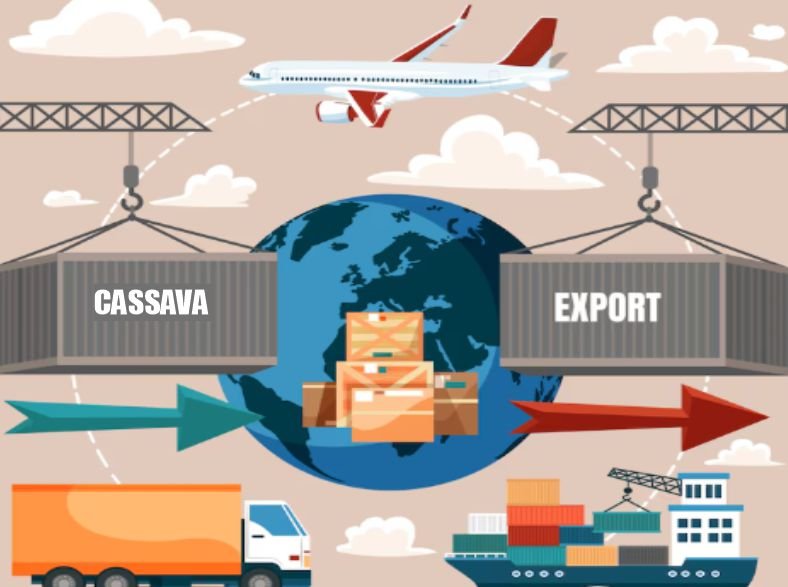
Export markets provide another income stream. Rising global demand for cassava products in Europe and Asia lets you earn foreign exchange and grow your business.
By investing in processing and quality production, you can tap into both local industries and international buyers.
The economic benefits of cassava extend from farm income to industrial growth and global trade opportunities, supporting broader economic development.
Cassava and Food Security Economics
Cassava benefits you and your community by supporting both food security and local economies.
Its ability to grow in poor soils gives you access to an affordable source of carbohydrates, keeping your family fed even when other crops fail.
By planting cassava, you also help stabilize food supplies for your neighbors and community.
Stabilizing Food Prices
Cassava helps keep local food prices steady. With multiple harvests possible each year, it reduces the effect of seasonal shortages.
When other crops are scarce, cassava ensures you have filling, affordable meals.
This reduces reliance on imported staples and helps families manage food costs without stress.
Supporting National Food Strategies
Governments recognize cassava’s role in addressing hunger and malnutrition.
Promoting its cultivation and processing creates jobs, increases income, and strengthens communities.
By growing and using cassava, you contribute to local economies while boosting overall food security.
Building Community Resilience
Cassava acts as a safety net during crises, helping communities remain stable.
Its economic benefits reach beyond the farm, supporting livelihoods and sustainable growth.
Conclusion
The economic benefits of cassava are clear in every stage of its use.
By growing, processing, and selling cassava, you generate income, create jobs, and strengthen local economies.
Its low input requirements and reliable yields make it accessible, while value-added products expand earning potential.
Cassava supports food security, stabilizes markets, and feeds industrial and export sectors.
Communities benefit through cooperatives, market access, and infrastructure improvements.
The crop empowers farmers, women, and youth, keeping money circulating locally and promoting sustainable development.
By investing in cassava, you not only improve household income but also contribute to broader economic stability and growth, making it a critical resource for rural and national development.
Frequently Asked Questions
What are the main economic benefits of cassava?
Cassava provides income, employment, value-added products, food security, and industrial opportunities, supporting households, local communities, and national economic stability.
How does cassava create jobs?
Employment arises across planting, harvesting, processing, transportation, storage, and marketing, engaging farmers, youth, and women in income-generating activities.
Can cassava support industrial growth?
Yes, cassava starch is used in food processing, textiles, paper, adhesives, and bioethanol, creating markets and stimulating industrial development.
Why is cassava important for rural economies?
Cassava stabilizes income, supports cooperatives, promotes market access, and fuels local trade, keeping money circulating and strengthening rural communities.
References

Chimeremeze Emeh is a writer and researcher passionate about Africa’s most transformative root crop—cassava. Through his work at cassavavaluechain.com, he explores the entire cassava industry, from cultivation and processing to its diverse applications in food, health, and industrial use.
He also writes for palmoilpalm.com, where he shares his extensive experience and deep-rooted knowledge of palm oil, covering red palm oil, palm kernel oil, and refined products. His work there reflects his lifelong connection to agriculture and his commitment to promoting sustainable value chains in Africa.
Driven by curiosity and purpose, Chimeremeze aims to shed light on how cassava continues to empower communities, strengthen food systems, and link traditional farming wisdom with modern innovation.