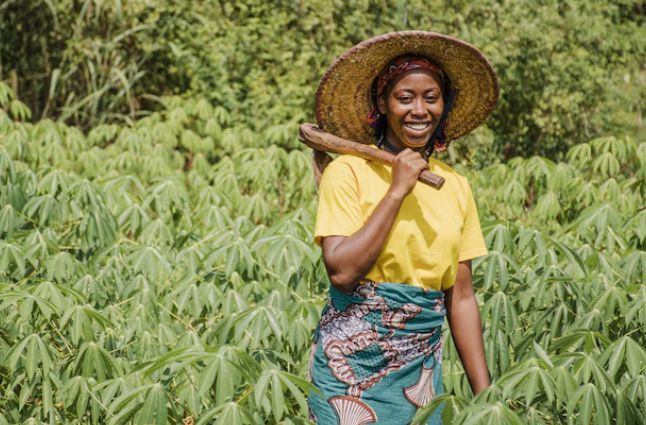
Cassava is my town’s most favorite crop in the Eastern part of Nigeria, fueling daily meals, traditions, and family livelihoods.
Growing up in the Eastern part of Nigeria, cassava, the super crop, was more than a crop; it was the heartbeat of our community and the backbone of our daily lives.
From the first light of dawn, families could be seen tending the fields, peeling, fermenting, or pounding cassava to prepare meals that fueled our energy and connected us to generations before us.
Whether it was garri for breakfast, fufu for lunch, or abacha and cassava fried balls for special occasions, every household relied on this versatile root.
Cassava shaped our work, our meals, and our traditions, providing not just food, but a sense of identity and community.
In this article, I share a personal account of how this humble crop supports our daily life, culture, and local economy.
A Crop That Shapes Our Lives
Cassava has been at the center of my life and my community in Eastern Nigeria.
I grew up surrounded by fields of cassava, where every family had a few pieces of land dedicated to its cultivation.
From planting to harvesting, cassava was always part of our daily routine, and I spent countless hours working the fields alongside my parents, siblings, and neighbors.
At any time of the year, you could see cassava in different stages of growth, reminding us of the cycle of life, work, and food security in our town.
In our household, cassava provided the energy we needed every day.
We ate it as garri, fufu, soaked preparations, cassava fried balls, or abacha.
Each meal connected me to my family and our land, and I understood how much effort went into producing it.
Cassava’s resilience amazed me. It could grow in soils that other crops struggled with and withstand dry periods, making it a reliable source of food for us and for many families in our community.
Beyond nutrition, cassava supported our livelihoods.
We sold portions of our harvest, giving our family income to meet household needs and contribute to the local economy.
Culturally, cassava appeared at festivals, feasts, and gatherings, symbolizing resilience and togetherness.
For me, cassava is not just a crop. It shapes our daily life, connects us as a community, fuels our meals, and supports our families.
Growing up with it taught me the value of hard work, cooperation, and the deep bond we share with our land and traditions.
Cultivating Cassava in Eastern Nigeria
Cultivating cassava in my town has always been a central part of life. Cassava thrives in the tropical climate of Eastern Nigeria, where warm temperatures and frequent rainfall create the perfect conditions for the crop.
The soil is rich, loamy, and well-drained, which helps young plants grow strong roots.
I remember my parents testing the soil for pH and nutrients, ensuring each plot had the best chance to yield healthy cassava.
Planting season is always exciting.
We start at the beginning of the rains when the soil is soft and moist.
I help cut healthy stems into pieces around 20 to 25 centimeters long and plant them carefully at an angle in mounds or ridges.
We aim for the right spacing so every plant has room to grow.
Working together, families in the village plant thousands of stems, turning the fields into a lively scene of activity and chatter.
Maintaining the fields takes effort. We weed by hand, removing anything that competes with the cassava.
Mulching helps keep the soil moist during dry periods, and we use local remedies to manage pests and diseases naturally.
Harvest time, usually between six and twelve months after planting, brings the community together.
Everyone joins in, laughing, sharing stories, and celebrating the fruits of months of hard work.
For me, cassava farming is fun, rewarding, and can make you rich.
Daily Energy from Cassava
Cassava fuels daily life in my community, providing steady energy and nourishment in many meals.
Its rich carbohydrates and nutrients make it a reliable source of sustenance for families, while its affordability and adaptability keep it at the center of our diets.
Garri, a roasted and fermented cassava is a favorite, enjoyed with water and sugar or paired with soups and stews.
Fufu, made by fermenting and pounding cassava into a smooth dough, serves as a comforting accompaniment to savory dishes.
We also enjoy abacha, a fermented and dried cassava dish seasoned with palm oil, vegetables, and spices, offering both flavor and nutrition.
Cassava fried balls, or fritters, provide a satisfying snack for gatherings or street food moments.
From breakfast to celebrations, cassava sustains our bodies, connects us through food, and strengthens the bonds that make daily life in our town vibrant and shared.
Community Processing Traditions
Processing cassava in my town brings the community together.
I remember joining neighbors and family to peel, grate, ferment, fry, and sun-dry cassava.
The work is labor-intensive, but when we come together, it becomes lively and manageable.
Older members share techniques passed down through generations, and I learn from their experience, carrying these lessons forward.
These sessions are full of laughter, storytelling, and music, turning hard work into celebration.
As we transform cassava into fufu, garri, or tapioca, I feel a strong sense of connection to my community and its history.
Working side by side strengthens bonds and keeps traditions alive.
Beyond culture, our collective efforts support the local economy, allowing us to share or sell surplus cassava.
Economic Role of Cassava in My Town
In my town, cassava drives our local economy. Many families rely on it for daily income.
We cultivate it, process it into garri, fufu, and abacha, and sell these products at village markets, drawing buyers from nearby towns.
Watching neighbors and relatives turn freshly harvested roots into value-added products, I see how cassava supports livelihoods and creates steady cash flow.
Women in particular play a key role in processing, which empowers them socially and economically.
The money earned helps us pay for school fees, healthcare, and household needs.
Beyond the village, cassava trade connects us to regional markets, generating jobs across farming, processing, and selling.
Seeing the impact on our community reminds me that this crop does more than feed us, it sustains families, strengthens local economies, and shapes the life and identity of our town.
Challenges and Adaptations
Farming cassava brings both opportunities and challenges.
Pests like the cassava whitefly and mealybug, along with diseases such as cassava mosaic and bacterial blight, can damage leaves and roots, reducing yields if not properly managed.
I could remember one time when our cassava farm, at a very tender stage, was ravaged by the cassava pest, which was widespread in my region at that time.
While it reduced our yields, it was a learning moment for the entire community.
Farmers often combine traditional practices with modern pest management to protect their crops.
Market fluctuations add another layer of challenge, as shifting demand and competition affect income and planning.
To adapt, many farmers join cooperatives, sharing resources, knowledge, and negotiating better prices.
Sustainable techniques like intercropping, organic fertilization, and crop diversification help maintain soil health, protect biodiversity, and reduce reliance on cassava alone.
Community workshops and training programs promote the exchange of practical skills and innovative solutions, encouraging resilience across generations.
Through these collective efforts, farmers continue to navigate environmental pressures and economic uncertainties, demonstrating persistence and resourcefulness.
Cassava farming thrives because of the combined determination, knowledge, and adaptability of those who cultivate it.
Celebrating Our Favorite Crop
Cassava in my town is beyond food. It is our identity.
Every harvest season, we celebrate with festivals where families and neighbors gather to honor the crop.
During these times, we showcase our cassava in many forms – from boiled tubers to cassava flour, highlighting the creativity and skill in our local cuisine.
One family favorite is abacha, passed down by our grandmothers, turning simple cassava into a festive delicacy.
Cassava also takes center stage in cultural fairs and community events, inspiring crafts, performances, and displays.
For us, it is a symbol of resilience, unity, and pride, anchoring our identity and reminding us of the strength in our shared traditions.
Conclusion
Cassava has shaped the rhythm of our lives, from the fields we tend at dawn to the meals that fuel our days.
I have seen how it connects families, neighbors, and generations, guiding our work, our celebrations, and our shared traditions.
It provides daily energy, supports livelihoods, and turns simple gatherings into vibrant community moments.
Through planting, processing, and trading, cassava strengthens both our economy and our sense of togetherness.
Even amid challenges like pests or market shifts, we adapt, learn, and persist.
For me, cassava is more than a crop; it is a companion, a teacher, and a reminder of our roots, resilience, and the life we build together around this beloved staple.
What is your cassava story?

Chimeremeze Emeh is a writer and researcher passionate about Africa’s most transformative root crop—cassava. Through his work at cassavavaluechain.com, he explores the entire cassava industry, from cultivation and processing to its diverse applications in food, health, and industrial use.
He also writes for palmoilpalm.com, where he shares his extensive experience and deep-rooted knowledge of palm oil, covering red palm oil, palm kernel oil, and refined products. His work there reflects his lifelong connection to agriculture and his commitment to promoting sustainable value chains in Africa.
Driven by curiosity and purpose, Chimeremeze aims to shed light on how cassava continues to empower communities, strengthen food systems, and link traditional farming wisdom with modern innovation.