Tapioca starch vs tapioca flour: Many wonder if they’re different, but the truth is, they are the same. Let’s unbundle the confusion.
Tapioca starch vs tapioca flour is a raging debate and can be confusing when you’re looking at a recipe or shopping for ingredients.
You might wonder if one works better than the other or if swapping them changes the result.
The truth is, they come from the same source – cassava root, and behave the same way in cooking and baking.
The difference you see on packaging usually comes down to regional naming or labeling practices.
In the United States, you’ll find “tapioca flour,” while in other countries, “tapioca starch” is more common.
Knowing they are the same lets you follow recipes confidently, replace one with the other without worry, and get the same smooth texture and results every time.
Table of Contents
Tapioca Starch and Tapioca Flour—One Ingredient
Tapioca starch and tapioca flour might seem different at first, but they are tapioca and come from the same source and work the same way in your recipes, keeping your cooking simple and consistent.
Both Come from the Cassava Root
When you look at the ingredient, you’re seeing the product of cassava, a starchy tuber grown in tropical regions.
The root is washed, peeled, and ground into a liquid, then dried into a fine powder, giving you tapioca starch or flour that behaves the same in your kitchen.
Identical Texture and Appearance
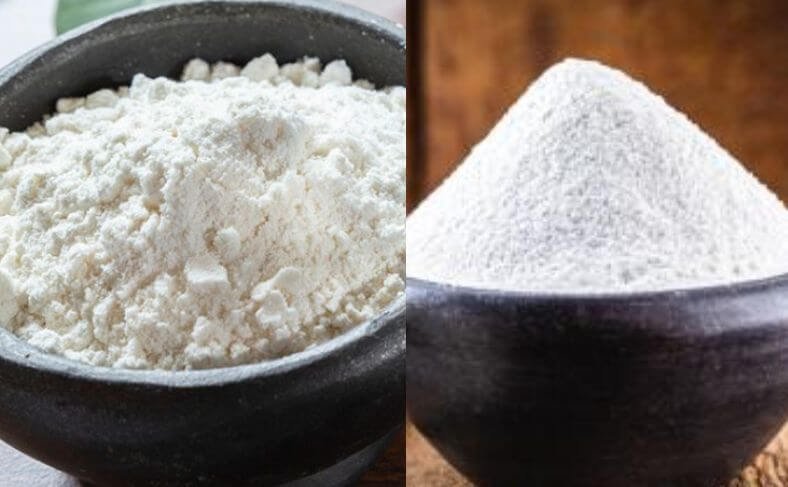
Both tapioca starch and flour appear as a fine white powder with a neutral taste.
They are naturally gluten-free, light, and smooth, which makes them easy to mix into sauces, puddings, or baked goods without changing flavor or consistency.
Interchangeable in Recipes
You don’t need to worry if a recipe says starch or flour. They perform the same role in thickening, baking, or adding moisture.
You can swap one for the other and still get the same texture, taste, and result.
Related Posts
Industry Trends of Tapioca Starch
Alternatives to Tapioca Starch
Modified Tapioca Starch: Everything to Know
How to Chemically Modify Tapioca Starch
Regional Naming Differences
One of the reasons the confusion of cassava starch vs cassava flour exists is because of regional naming.
In the United States, you’ll usually see it called tapioca flour, while in Europe, Asia, and other regions, it is commonly labeled tapioca starch.
The ingredient itself doesn’t change, but the name does, depending on local conventions and culinary traditions.
Knowing this helps you shop and cook with confidence without worrying about following recipes from different countries.
If a recipe calls for tapioca flour, you can use tapioca starch and get the same texture, thickness, and results.
The naming difference is purely regional, and understanding it makes cooking simpler.
Once you recognize that starch and flour are just two names for the same ingredient, you can use it freely in sauces, puddings, baked goods, and any dish that requires tapioca.
Labeling Confusion
Another reason the confusion exists is because of labeling.
Many tapioca products show “starch” or “flour” on the package, which can make you think they are different ingredients. In truth, both come from the cassava root and work the same in cooking and baking.
The labels reflect regional naming or marketing choices, not a change in the product itself.
When a package says tapioca starch or tapioca flour, it does not mean one is more processed or behaves differently.
Checking the ingredient list confirms that both are cassava starch. Knowing this makes it easy to use either product confidently for thickening sauces, making puddings, or baking gluten-free treats.
Understanding labeling removes doubt, simplifies shopping, and ensures your recipes turn out just as expected, no matter which name appears on the package.
Conclusion
Tapioca starch and tapioca flour are the same ingredient, both coming from cassava root.
The differences you see are only in naming or labeling.
Knowing this lets you follow recipes confidently, swap one for the other without worry, and achieve consistent results in baking, thickening, or puddings.
Understanding that starch and flour are interchangeable removes confusion, simplifies shopping, and ensures your dishes turn out perfectly every time, no matter what term appears on the package.
Frequently Asked Questions
Is tapioca starch different from tapioca flour?
No, they are the same ingredient. The difference is only in the name, depending on regional conventions or packaging.
Can I substitute tapioca flour for tapioca starch?
Yes, you can. Both work the same way in recipes, providing identical texture, thickness, and consistency in baking or cooking.
Why do some recipes call for starch and others flour?
The naming depends on the region. In the U.S., it’s often called tapioca flour, while other countries prefer tapioca starch.
Do tapioca starch and flour behave differently in cooking?
No, they perform identically. Both thicken sauces, improve texture, and are gluten-free, making them interchangeable in all recipes.
References
- https://usflour.com/what-are-the-uses-of-tapioca-starch/
- https://www.barcelonesa.com/en/blog/best-applications-tapioca-starch/
- https://www.chagrinvalleysoapandsalve.com/collections/organic-tapioca-flour
- https://angelstarch.com/role-of-tapioca-starch-in-gluten-free-food-production/
- https://www.fao.org/4/x5032e/x5032E04.htm

Chimeremeze Emeh is a writer and researcher passionate about Africa’s most transformative root crop—cassava. Through his work at cassavavaluechain.com, he explores the entire cassava industry, from cultivation and processing to its diverse applications in food, health, and industrial use.
He also writes for palmoilpalm.com, where he shares his extensive experience and deep-rooted knowledge of palm oil, covering red palm oil, palm kernel oil, and refined products. His work there reflects his lifelong connection to agriculture and his commitment to promoting sustainable value chains in Africa.
Driven by curiosity and purpose, Chimeremeze aims to shed light on how cassava continues to empower communities, strengthen food systems, and link traditional farming wisdom with modern innovation.