Last updated on August 1st, 2026 at 01:46 pm
There are many culinary applications of cassava flour. It thickens sauces, structures bread, binds batters, and creates crisp fried coatings, all without gluten and without a strong flavor getting in the way.
Its neutral taste is exactly why it crosses cuisines so easily, from West African fufu to Brazilian pão de queijo to modern gluten-free pizza crusts.
Knowing why it behaves the way it does- its higher gelatinization temperature, its heavier liquid absorption, its lack of gluten- helps you get consistent results instead of guessing.
This guide covers the science behind its baking behavior, real substitution ratios by application, and where it shows up across global cuisines.
Table of Contents
Why Cassava Flour Behaves the Way It Does
Four properties explain nearly everything cassava flour does in a recipe, and knowing them prevents most common mistakes.
- Higher gelatinization temperature: cassava flour needs more heat than wheat flour to thicken and set. This comes from research on cassava starch properties, so breads, pancakes, and cakes may take slightly longer to cook through.
- Heavier liquid absorption: cassava flour pulls in more moisture than wheat flour, so batters and doughs typically need extra water, milk, or eggs to reach the right consistency.
- No gluten, so it needs a binder: without gluten’s elastic structure, cassava flour needs eggs, flaxseed, chia seeds, or xanthan gum to hold bread and baked goods together.
- Resistant starch content: a portion of cassava flour’s starch resists digestion in the small intestine and reaches the colon intact. This may support gut health as a prebiotic, based on resistant starch research published on PMC.
Culinary Applications of Cassava Flour by Category
Cassava flour’s fine texture and neutral flavor carry across every major cooking category, though each one calls for slightly different handling.
Baking (Bread, Cakes, Cookies, Muffins)
Cassava flour blends smoothly into batter and dough, retains moisture to prevent dryness, and browns evenly for a golden finish.
Its neutral flavor lets chocolate, fruit, and spices come through without interference, and our cassava flour recipes hub covers specific baked goods in full.
Savory dishes (soups, sauces, pancakes, dumplings, fritters)
It thickens liquids smoothly without altering taste, binds batters for pancakes and fritters, and forms dough that stays intact through steaming or boiling.
Our post on cassava pasta covers another savory application built around this same absorbency.
Tortillas and Wraps
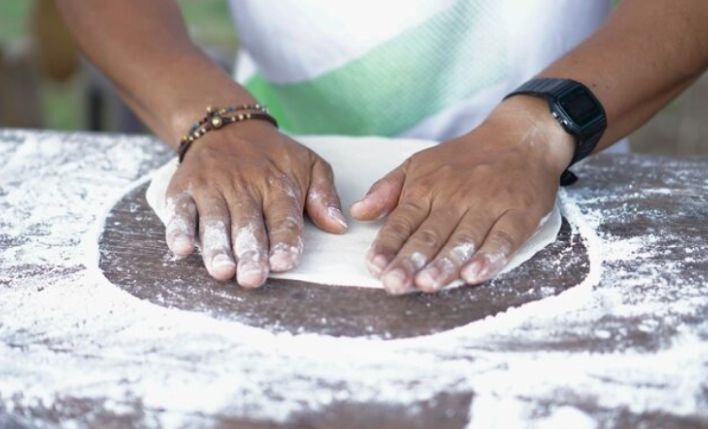
Cassava flour’s absorbency and fine texture create soft, pliable dough, though proper hydration matters more here than in most other applications.
Our dedicated guide on how to make cassava tortillas covers the full technique.
Savory snacks and fries
Coatings and batters adhere evenly for a consistently crisp exterior, working well for dusting fries or building a light, crunchy snack batter.
Where Cassava Flour Specifically Applies Worldwide
Cassava flour’s neutral flavor has carried it into genuinely different culinary traditions, distinct from whole-root dishes like fufu or fried cassava chips.
In South America, cassava flour and its starch relative anchor Brazilian pão de queijo and Colombian arepas, giving both dishes their signature chewy bite.
In parts of Asia, flour and starch from cassava appear in noodles, dumplings, and desserts, delivering a soft, chewy texture other gluten-free flours struggle to match.
Modern kitchens worldwide now use it to reinvent pancakes, cookies, pizza crusts, and pasta while keeping every one of them gluten-free.
Our post on cassava-based foods around the world covers the full cultural picture, including whole-root dishes and other cassava products beyond flour specifically.
Substitution Ratios by Application
Getting the ratio right matters more than getting the technique right, since cassava flour’s absorbency changes by application.
Our post on cassava flour vs wheat flour covers the broader substitution logic behind these ratios.
- Cakes, cookies, and brownies: substitute 1:1 for wheat flour, watching moisture and adjusting liquid slightly if the batter looks dry.
- Tortillas and flatbreads: add 10 to 20 percent extra water or milk beyond what a wheat-flour recipe calls for, to prevent cracking and keep the dough pliable.
- Thickening soups and sauces: start with half the amount you would use of wheat flour, mixing it with cold water first to prevent clumping before adding to hot liquid.
- Bread: pair with a binder like xanthan gum or psyllium husk plus eggs, since bread needs the most structural help of any application on this list. Hydrocolloids like these mimic gluten’s binding function in gluten-free dough, based on a review of gluten-free flour formulation published on PMC.
Safety and Sourcing
Properly processed cassava flour is safe, but the raw root carries cyanogenic compounds that improper processing does not remove.
Our post on cassava and cyanide covers the real safety standard and how to buy flour that meets it.
Cassava root can also absorb heavy metals like lead from surrounding soil as it grows.
This is an issue tied to sourcing and soil quality rather than the flour itself, based on Consumer Reports testing of cassava-based products.
Choosing flour from a trusted, tested source addresses both concerns at once.
Store finished flour in an airtight container away from moisture and heat, covered fully in our guide on how to store and preserve cassava flour.
Conclusion
Cassava flour earns its place across baking, savory cooking, and frying because its properties are consistent and predictable once you know them.
Higher gelatinization temperature, heavy liquid absorption, and zero gluten explain nearly every adjustment a recipe needs.
Start with cakes, cookies, or thickening, since those need the least adjustment, before moving to bread or tortillas where binders and hydration matter more.
On Cassava Pathway farm, this flour moves between sweet and savory dishes in the same week without issue.
Choose properly processed flour from a trusted source, and the rest is just cooking.
Frequently Asked Questions
What makes cassava flour suitable for baking?
Its fine texture, moisture retention, and neutral flavor support gluten-free baking while producing tender, consistent breads, cakes, cookies, and muffins.
How does cassava flour work in savory dishes?
It thickens soups, sauces, and gravies smoothly, binds batters, and adds subtle texture while keeping pancakes, fritters, and dumplings gluten-free.
Can cassava flour be used for snacks and fries?
Yes, its fine texture creates crisp coatings and light batters, locking in moisture for gluten-free fries, chips, and fritters.
How much extra liquid does cassava flour need for tortillas?
Cassava flour absorbs more liquid than wheat, so tortillas typically need 10 to 20 percent extra water for pliable, crack-free dough.

Chimeremeze Emeh is a tropical crop farmer and chemical engineer from Ntigha, Isiala Ngwa North LGA, Abia State, Eastern Nigeria, specializing in cassava and palm oil, with over 30 years of hands-on experience growing, harvesting, and processing cassava. He grows TMS series, TME 419, and local traditional varieties on his own farms and operates a small-scale cassava flour and starch production business through Cassava Pathway, which he founded as a CAMA-registered agribusiness in 2024. He is also the founder of Palm Oil Pathway, where he applies the same tropical farming expertise. His farms are located in Ntigha, Abia State.