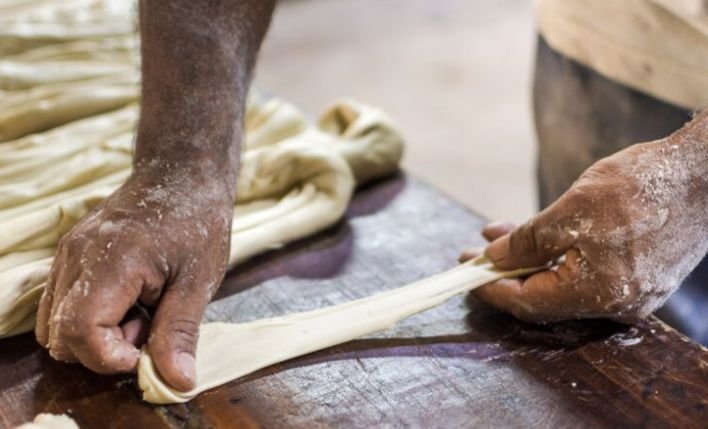
The industrial application of tapioca drives starch-based production, improving efficiency in food processing, adhesives, textiles, and packaging industries.
Tapioca application goes beyond a cooking ingredient; it plays a vital role across multiple industries.
At the heart of its use is the industrial application of tapioca in pharmaceuticals, textiles, agriculture, and packaging.
In medicine, tapioca starch acts as a binder in tablets, improving stability and effectiveness.
In agriculture, it provides a high-energy feed source for livestock, supporting growth and health.
Its natural, gluten-free, and biodegradable properties make it ideal for sustainable packaging and eco-friendly fabrics.
Companies increasingly rely on tapioca to create solutions that meet commercial, environmental, and practical demands.
By understanding its industrial roles, you can see how this simple starch contributes significantly beyond everyday food applications.
Why Tapioca is an Industrial Raw Material
Tapioca serves as a key industrial raw material because of its natural binding, thickening, and stabilizing properties, helping your manufacturing processes achieve consistent quality, smooth texture, and cost-effective performance across industries.
Thickening and gelling agent
Tapioca is used in industries for its thickening effect.
Thickening and gelling agent properties make tapioca suitable for food, textile, and paper production.
It forms stable pastes, adjusts viscosity precisely, and holds structure under heat or shear, helping your products maintain uniform texture and performance during processing.
Adhesive and binder applications
Adhesive and binder applications benefit from tapioca’s strong sticking power.
It supports plywood, paper, and packaging production by providing reliable bonding, easy handling, and a clean finish, helping your operations reduce reliance on chemical adhesives while keeping production safe and efficient.
Film-forming and coating potential
Film-forming and coating potential allows tapioca to protect surfaces and improve product durability.
In textiles, paper, or coatings, it creates smooth layers, improves water resistance, and supports color or print retention, helping your products maintain quality and finish over time.
Cost-effective and renewable source
Cost-effective and renewable source makes tapioca a practical choice for industrial use.
Locally grown, easy to process, and widely available, it helps your business reduce raw material costs, secure consistent supply, and rely less on imported alternatives.
Pharmaceutical Applications of Tapioca
The foremost industrial uses of tapioca, also called tapioca flour or starch is in the pharmaceutical industries.
Tapioca starch is widely used in the pharmaceutical industry for its binding, stabilizing, and controlled-release properties.
As a binder, it ensures that tablet and capsule ingredients stick together, maintaining dosage consistency and stability.
It also acts as a stabilizer in liquid and powdered medications, preventing ingredient separation, caking, and clumping while improving flowability and uniformity.
These qualities help maintain product integrity and ensure accurate dosing.
Additionally, tapioca starch is valuable in controlled and extended-release formulations, where its natural viscosity allows gradual drug release over time.
This supports sustained therapeutic effects, enhances patient compliance, and reduces sudden fluctuations in drug concentration.
Its multifunctional role improves both the performance and safety of medications, making tapioca starch a trusted ingredient in pharmaceutical manufacturing and an essential component for reliable, effective drug delivery.
Related Posts
Culinary Applications of Tapioca
Nutritional Profile of Tapioca
Tapioca Pearls: Complete Guide
Complete Guide to Tapioca Recipes
Tapioca in the Adhesives and Paper Industry
Tapioca has found its way into industries beyond food, offering practical and eco-friendly solutions.
The industrial application of tapioca in adhesives and paper has caught the attention of manufacturers seeking sustainable alternatives.
Biodegradable Adhesives
Tapioca-based adhesives are a safe, non-toxic alternative to traditional synthetic adhesives.
They provide strong bonding for materials while eliminating harmful chemicals that could affect users or the environment.
These adhesives are ideal for crafts, packaging, and industrial applications because they hold materials securely and naturally break down over time.
By choosing tapioca adhesives, you contribute to reducing chemical waste and supporting environmentally friendly practices while still achieving reliable performance in various manufacturing processes.
Packaging Benefits
In packaging, tapioca adhesives offer both strength and sustainability.
They create bonds that are durable enough to handle storage and transportation without compromising safety.
Because they are biodegradable, they reduce environmental impact compared to conventional adhesives. See cassava bags packaging.
Manufacturers can confidently use these adhesives knowing they meet performance standards and align with growing consumer demand for eco-conscious packaging solutions.
For anyone involved in production or product design, tapioca provides a practical way to balance quality and environmental responsibility.
Paper Coating and Finishing
Tapioca starch is highly effective in paper coating and finishing.
It fills gaps in paper fibers, enhancing strength and smoothness while creating a uniform surface for printing.
This improves ink absorption and ensures sharper, more vivid images.
Using tapioca in paper processing helps manufacturers produce high-quality products that perform consistently.
Whether for commercial printing, packaging, or specialty papers, incorporating tapioca contributes to professional results while reducing reliance on synthetic chemicals, offering both quality and environmental benefits.
Eco-Friendly Manufacturing
Incorporating tapioca into production helps companies make sustainable choices without sacrificing product quality.
Its natural properties replace chemical-intensive materials in adhesives and paper, reducing pollution and supporting environmental goals.
Manufacturers can meet performance standards while creating eco-conscious products that appeal to consumers increasingly focused on sustainability.
By using tapioca, you encourage greener practices in industrial processes, supporting a safer, cleaner environment.
Its applications demonstrate that simple, natural ingredients can deliver efficiency, reliability, and environmental responsibility in modern manufacturing.
Uses of Tapioca in the Textile Industry
The industrial application of tapioca helps improve fabric quality, finishing, and printing processes.
Fabric Starching and Finishing
Tapioca starch is widely used in fabric starching to enhance texture, stiffness, and smoothness.
When applied to cotton, linen, or synthetic fabrics, it creates a crisp, durable finish that improves both feel and appearance.
By incorporating tapioca, manufacturers achieve consistent, high-quality fabrics that hold their shape and finish better over time, supporting professional standards in textile production while reducing reliance on chemical starches.
Improved Dye Absorption and Color Vibrancy
Treated with tapioca starch, fabrics absorb dyes evenly, producing brighter, uniform colors.
This ensures consistency across batches, which is critical for commercial textile production.
By improving dye uptake, tapioca helps textiles maintain a vibrant, polished look, meeting both aesthetic and functional demands.
Manufacturers benefit from better color retention, reduced waste, and a more reliable process when working with natural and synthetic fibers alike.
Stabilization in Printing
Tapioca enhances the viscosity and stability of printing pastes used in screen printing, digital printing, and industrial textile printing.
It ensures inks adhere properly without bleeding or smudging, maintaining the integrity of detailed designs.
This is essential for achieving precise patterns, professional quality, and repeatable results.
Manufacturers rely on tapioca to maintain consistent production standards and deliver high-quality printed textiles to the market.
Support in Embroidery
In embroidery, tapioca starch acts as a stabilizer that strengthens fabric and prevents fraying, distortion, or puckering during stitching.
It allows intricate patterns to hold their shape and finish cleanly, enhancing overall craftsmanship.
By using tapioca in embroidery, textile producers can reduce errors, minimize material waste, and improve efficiency, resulting in durable, high-quality finished products that meet both commercial and consumer expectations.
How Tapioca is Used in the Packaging and Bioplastics
Tapioca is gaining attention beyond the kitchen as a sustainable solution for packaging and bioplastics.
Its industrial application of tapioca provides eco-friendly alternatives to conventional plastics, helping you and manufacturers reduce environmental impact while maintaining product performance.
Biodegradable Films
Tapioca starch can be processed into biodegradable films suitable for single-use packaging.
These films provide reliable protection for food and other products while breaking down naturally.
Using these materials reduces waste in landfills and decreases plastic pollution, giving you packaging that is both functional and environmentally responsible.
Packaging Applications
Tapioca-based packaging works well for disposable trays, containers, and food wraps.
It creates effective barriers against moisture and oxygen, keeping contents fresh.
Manufacturers can meet product safety and shelf-life standards while offering solutions that align with growing consumer demand for greener packaging choices.
Bioplastics Production
Tapioca serves as a foundation for bioplastics that decompose faster than traditional plastics.
These materials reduce dependence on fossil fuels and support renewable manufacturing processes.
Using tapioca bioplastics allows industries to lower their ecological footprint and adopt more sustainable production practices.
Circular Economy Benefits
By incorporating tapioca into packaging and bioplastics, companies can support recycling and reuse initiatives.
These materials promote a circular economy, helping you and industries reduce environmental strain while maintaining quality and efficiency.
Tapioca is becoming a leading choice in responsible, sustainable packaging solutions.
Agricultural Uses and Animal Feed Applications of Tapioca
Tapioca is widely used in agriculture, providing solutions for livestock nutrition and soil improvement.
Its industrial application of tapioca supports sustainable farming while enhancing animal growth and crop health.
High-Energy Animal Feed
Tapioca starch offers a rich carbohydrate source for cattle, pigs, and poultry.
Incorporating it into feed promotes weight gain, boosts energy levels, and improves overall livestock health.
It is especially valuable in regions where grains are costly or limited, providing a reliable, economical, and sustainable feed option for farmers.
Feed Additives and Palatability
Tapioca can be transformed into pellets or silage, making it more digestible and appealing to animals.
This helps ensure consistent consumption, supports growth, and encourages efficient meat and egg production, benefiting both livestock productivity and farm profitability.
Soil Conditioning and Fertility
By-products from tapioca processing enrich soil as organic matter.
They improve soil structure, water retention, and nutrient content, supporting healthier crops.
Farmers can leverage these by-products to reduce dependence on chemical fertilizers and encourage more sustainable agricultural practices.
Eco-Friendly Fertilizers
Tapioca-derived materials are being tested as natural fertilizers and soil amendments.
Their use enhances plant growth while minimizing environmental impact.
By integrating tapioca into both feed and soil management, you support sustainable farming practices that balance productivity with ecological responsibility.
Emerging Research on Tapioca Applications and Uses in Industries
Tapioca is gaining attention beyond food, with studies revealing its potential across industries.
Its industrial application of tapioca is shaping sustainable materials, eco-friendly adhesives, and innovative composites for future-oriented solutions.
Biodegradable Films
Researchers are developing biodegradable films from tapioca starch to replace conventional plastics.
These films naturally break down while protecting food and other products.
Using tapioca reduces plastic pollution and aligns with global sustainability goals, making it an attractive option for manufacturers and consumers seeking environmentally responsible packaging solutions.
Eco-Friendly Adhesives
Tapioca starch shows promise as a natural binder in adhesives.
These starch-based adhesives offer strong performance while lowering environmental impact.
They could replace synthetic adhesives in industrial and household applications, supporting greener production practices without sacrificing reliability.
Sustainable Composites
Studies are exploring tapioca combined with natural fibers to create composites for construction and automotive uses.
These materials reduce dependence on petroleum-based components, offering durable, sustainable alternatives.
By integrating tapioca into composites, industries can contribute to eco-conscious innovation and responsible manufacturing practices.
Advancing Material Science
Emerging research positions tapioca as a key ingredient in sustainable material development.
Its applications highlight how a simple starch can address environmental challenges, encourage innovation, and expand the role of natural resources in modern industry.
Conclusion
The industrial application of tapioca extends far beyond food, impacting pharmaceuticals, textiles, packaging, bioplastics, agriculture, and emerging materials.
Its natural starch properties make it ideal for binders, stabilizers, adhesives, biodegradable films, and animal feed.
Industries increasingly rely on tapioca for sustainable solutions that improve efficiency, reduce environmental impact, and maintain product quality.
From enhancing tablet stability to supporting soil fertility and creating eco-friendly packaging, tapioca proves itself a valuable, multi-purpose ingredient.
Understanding its roles highlights how a simple starch can influence manufacturing, agriculture, and material innovation.
As research continues, tapioca’s industrial applications will expand further, offering practical, sustainable, and eco-conscious solutions across multiple sectors.
Frequently Asked Questions
What industries use tapioca industrially?
Tapioca is utilized in pharmaceuticals, textiles, adhesives, packaging, bioplastics, agriculture, and emerging materials, such as sustainable composites for the construction and automotive sectors.
How does tapioca benefit pharmaceuticals?
Tapioca starch acts as a binder and stabilizer in tablets and capsules, improving dosage consistency, controlled release, and overall medication reliability.
Why is tapioca important in packaging?
Tapioca-based films and bioplastics offer biodegradable, moisture-resistant alternatives to conventional plastics, thereby reducing waste and promoting eco-friendly, sustainable packaging solutions.
Can tapioca be used in agriculture?
Yes. Tapioca serves as a high-energy feed for livestock, improves soil fertility through by-products, and contributes to eco-friendly fertilizers and sustainable farming practices.
References
- Tapioca Starch Applications: Comprehensive Industrial Uses
- Top 5 Applications of Tapioca Starch in Modern Industries

Chimeremeze Emeh is a writer and researcher passionate about Africa’s most transformative root crop—cassava. Through his work at cassavavaluechain.com, he explores the entire cassava industry, from cultivation and processing to its diverse applications in food, health, and industrial use.
He also writes for palmoilpalm.com, where he shares his extensive experience and deep-rooted knowledge of palm oil, covering red palm oil, palm kernel oil, and refined products. His work there reflects his lifelong connection to agriculture and his commitment to promoting sustainable value chains in Africa.
Driven by curiosity and purpose, Chimeremeze aims to shed light on how cassava continues to empower communities, strengthen food systems, and link traditional farming wisdom with modern innovation.